In this guide
Knowing the address does not tell you which entrance to use, who expects you or whether the new location is ready for your assigned work.
Confirm the reporting point, not just the destination
Ask for the first-day reporting instructions: location, time, contact and any authorized arrival arrangements. If the move covers more than one location, identify which one applies to the first assignment. Public visitor directions are useful context but may differ from employee instructions.
Phoenix Public Works describes facilities responsibilities across City buildings, including administrative and service settings. This variety makes location-specific questions sensible. The public description does not establish an employee’s building access, parking arrangement or equipment readiness.
Separate three kinds of readiness
Arrival readiness means you know where and when to report. Work readiness means the needed workspace, equipment and approved access have been addressed. Responsibility readiness means everyone understands which duties move with you and which stay at the previous site. One can be complete while another remains unresolved.
Use a short brief with confirmed instructions, pending questions and the official route for each. Do not include security details, badge numbers or building-access codes in a personal planning tool. Follow employer rules for handling any site-specific instructions.
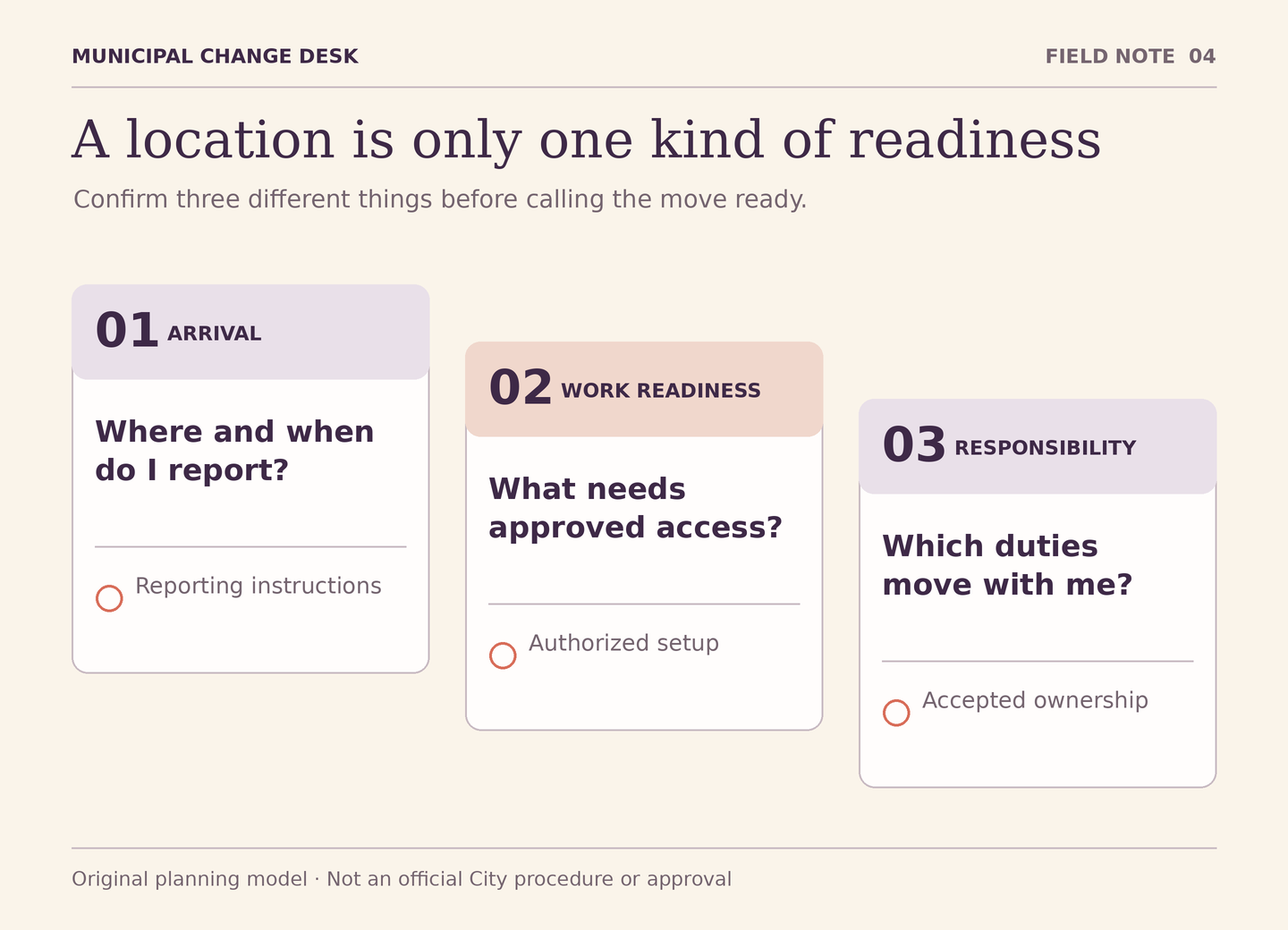
Worked hypothetical: a facilities-support employee changes base
An employee hypothetically begins reporting from a different City facility while continuing some facilities-support work. They know the new address but have not confirmed who will receive them or whether a recurring paper-based task stays at the former location.
The employee obtains first-day reporting instructions from the designated supervisor. The relevant workplace contacts address approved technology and equipment needs. The old task is assigned to a colleague at the previous location, with an agreed acceptance point. These are invented circumstances, not a description of Phoenix’s internal relocation process.
The employee’s brief now says what is confirmed and what still needs action. It does not say “ready” merely because a map route exists. If a dependency remains unresolved on the reporting day, the employee follows the supervisor’s direction rather than improvising access or moving records through a personal account.
Ask what should move and what should stay
Equipment, official records and work responsibilities can have different owners and movement rules. Ask for actual instructions before transporting or copying them. Moving yourself does not authorize moving every item associated with your previous workspace.
The public ITS page identifies City technology functions and employee assistance. Use the employer’s authorized channel for device or access arrangements. This publication cannot verify that a device is configured, a room is available or a requested permission has been granted.
Review the first working day as a test of the brief
After arrival, identify any difference between the plan and the assignment you actually received. Did the reporting point change? Is a required task waiting for access? Is someone at the former location still expecting you to do work that moved elsewhere? Raise the concrete discrepancy.
The brief is finished when the reporting instructions are understood and unresolved readiness issues have an accepted owner. It does not replace orientation or safety instructions. The schedule rehearsal adds time and personal logistics; the field-to-office transition addresses the change in how the work itself is performed.
Sources and limits
Public sources checked October 5, 2026. Editorial examples are hypothetical; official instructions and case-specific decisions remain with the responsible City service.
- City of Phoenix About Public Works
Public scope of solid waste, fleet and facilities functions. Used to ground hypothetical workforce transitions, not to describe a verified internal handoff process.
- City of Phoenix Information Technology Services
Public description of City technology, identity management, employee IT assistance and project functions; no private access workflow was tested.